
Not a numbers person? You’re in the right place.
If looking at your business finances makes your eyes glaze over, you’re not alone. Many business owners feel overwhelmed when it comes to understanding their profit and loss statement, tracking cash flow, or figuring out if their margins are actually healthy.
But here’s the truth:
You don’t need an accounting degree to feel confident with your numbers.
You just need the right information explained in a way that actually makes sense.
In this post, we’re going to walk through three of the most important financial concepts every small business owner should know: your P&L, your cash flow, and your margins. No jargon. No spreadsheets required.
Why Knowing Your Numbers Matters
When you understand your numbers, you can:
- Make better decisions
- Set realistic goals
- Catch red flags before they turn into big problems
- Pay yourself consistently
- Plan for growth with confidence
You don’t have to love the numbers, but you do need to know them.
The Profit & Loss Statement (P&L), Simplified
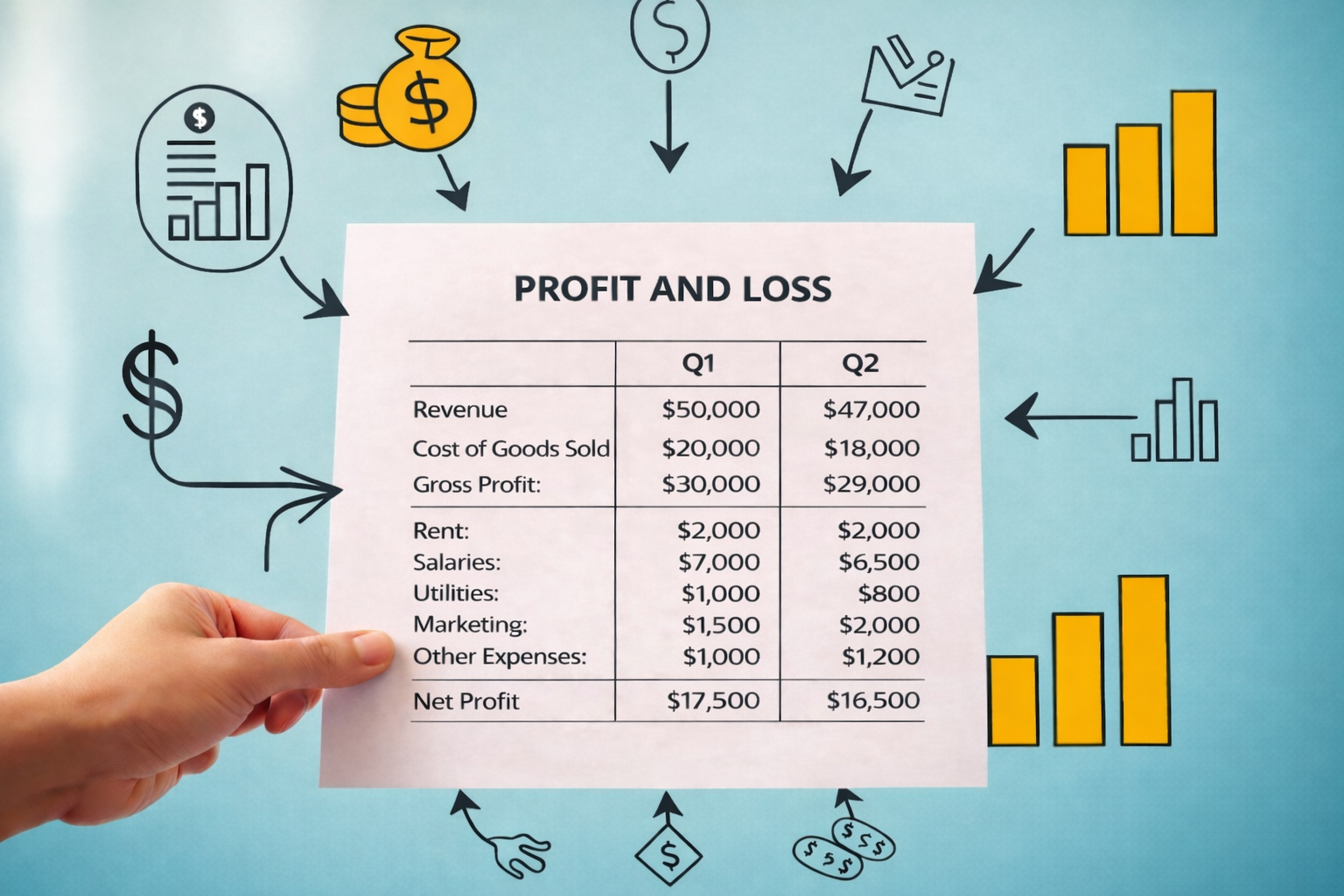
Your profit and loss statement (also called an income statement) shows how much money your business earned, how much it spent, and what’s left over.
It’s usually broken down like this:
Revenue – All the money your business brought in
Cost of Goods Sold (COGS) – Direct costs tied to delivering your product or service
Gross Profit – Revenue minus COGS
Operating Expenses – Ongoing business costs like software, rent, or subscriptions
Net Profit – What’s left after all expenses are paid (also called the bottom line)
Think of your P&L as your business’s report card. It shows if you’re making money, losing money, or just breaking even.
What Is Cash Flow (And Why It Feels So Tricky)?
Cash flow is about timing.
It tracks how money moves in and out of your business and when.
Even if your P&L says you’re profitable, your cash flow could still feel tight if:
- You’re waiting on late invoices
- You paid for big expenses upfront
- You didn’t set aside enough for taxes
This is why a lot of business owners feel like they’re doing “fine on paper” but still struggle to pay themselves.
Cash flow helps you:
- Know when you can invest in your business
- Avoid overdrafting your account
- Plan for slow seasons or unexpected expenses
- Sleep better at night
Want to get a clearer picture? Look at your cash flow month to month, not just in totals.
Let’s Talk Margins: What Are They and Why Do They Matter?
Your margin is the percentage of revenue that you get to keep after covering certain costs.
There are two key types to know:
- Gross Margin = (Revenue – Cost of Goods Sold) ÷ Revenue
- Net Margin = Net Profit ÷ Revenue
The higher your margin, the more efficient and profitable your business is.
Low margins can be a red flag that your prices are too low or your costs are too high.
Even just a 5% improvement in your margins can have a big impact over time.
You Don’t Need to Be a Finance Pro to Get This Right
Understanding your numbers doesn’t mean becoming your own CFO.
It means knowing how to spot trends, make confident decisions, and build a business that supports your life, not one that drains it.
If you’re still feeling unsure, that’s okay. You don’t have to figure this out alone.
Want a Clearer Picture of Your Finances?
At Rooted Accounting, I help small business owners:
- Understand their reports in plain English
- Clean up and organize their bookkeeping
- Create monthly systems that reduce stress
- Use their numbers to grow with confidence
📩 Reach out if you’re ready to stop avoiding your numbers and start using them to build something sustainable.
You don’t need to love numbers. You just need to make peace with them.
When you understand how your business is actually performing, not just how it feels, you get to lead with clarity instead of guesswork.
And that kind of clarity? It’s a game-changer.
Leave a Reply